
Armen’s Story as recorded by Kathy
Getting Out
When I was 15 my friends and I would occasionally visit the French, U.S. and other Western embassies in m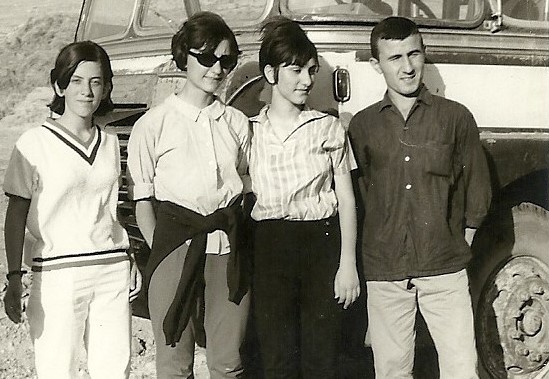 y home town of Aleppo, Syria. They all had fantastic pictures of life in their country – young men not much older than myself with their own apartment, driving their own car with a beautiful girlfriend by their side. I easily decided I wanted to experience those things for myself. But travel outside of Syria was restricted for most people – except for priests. So I paid a visit to the Archbishop and told him I wanted to be a priest.
Technically, I belonged to the Armenian Orthodox Church, which is protestant, but since I attended a French Jesuit School. I figured that would work. There was just one thing I hadn’t counted on. Although I got excellent grades at that school, I had a reputation for questioning the authority of the priests who were swift to whack you on the hand with a rod for any transgression and I sure didn’t like going to mass every morning at 7. These behaviors apparently are not what the Church looks for in its priests.
Nevertheless, the archbishop and I chatted for a while but then he said that he thought I could ‘better serve my community as a civilian.”
A few years went by and I set on another plan. I would get permission to leave Syria by going to school in my cultural homeland, Armenian, which at that time was part of the Soviet Union. The educational attache to the Soviet Union, a man named Kerkin, was located in Aleppo so I went to see him. He explained that there were quotas, and I would need references from people that the Ambassador knows, especially Armenian Communists and that I should come back next year. But I couldn’t wait that long.
At that time – the mid 1960s – Arab countries including Syria were frequently at war with Israel. Any man 18 years or older who was not attending school was subject to the military draft. So I registered with the School of Law in Beirut, Lebanon. I was getting antsy and had now set my sights on going to America even though the Syrians had burned down the U.S. embassy following the ’67 war and the U.S. had severed diplomatic ties with Syria.
One day several policemen came to my parents’ house. They pounded on the door and when I answered one of them asked, “Are you Armen Kevrekian?”
“No,” I lied, “He’s in Beirut. “I’m his brother, Krikor.” The policeman persisted. “Show me your ID,” he demanded. Again I lied, “I don’t have it here; I left it at my house.”
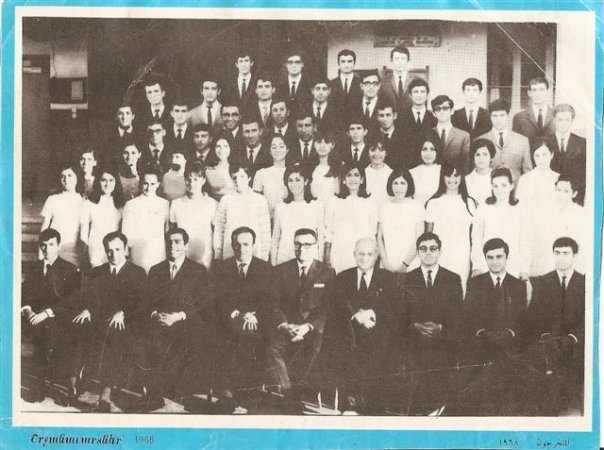 My class at the Karin Yeppe Armenian College
The policeman looked me over and glared at me as he tried to determine if I was being truthful. I tried to appear calm and not reveal my nervousness. If they didn’t buy my story, they could haul me away right then.
“Tell your brother Armen that he is to report to the military in one week and if he doesn’t report, we’ll be back to get him,” the policeman threatened. As I closed the door I let our a sigh of relief and then ran to my room to get my suitcase. I always kept it half-packed in anticipation of a the visit that had just occurred. I added a few more items, ran to the train station and caught the next train to Beirut where there was a U.S. embassy. I was now determined to get to America. In addition to the fabulous lifestyle everyone lived there, I had heard it described as the land of plenty – with abundant food and so much money, you could just pick it up on the street. This was the place for me, but to get there I knew I’d need help from someone who wasn’t as easily fooled as that Syrian policeman.
I immediately went to the U.S. embassy and requested a meeting to obtain a U.S. entry visa. Meanwhile, I applied and was accepted at the University of Perugia, Italy, and after a two week wait, I obtained an exit visa to leave Syria that had stamped in bold letters, “authorized to go only to Italy.” I didn’t know how to get around that, but I knew I’d figure something out.
In those days I could speak only the most rudimentary English, so when I finally met with a U.S. diplomat at the embassy, I needed an interpreter. The woman interviewed me for what amounted to only about 10 minutes with all the translation that was required and then abruptly denied my request for a U.S. student visa.
“Why?” I asked.(That much English I knew.)
She said she thought I intended to move permanently to the U.S. and not just go there to attend school. I was devastated. I tried to change her mind, but between the interpretation and her resolve, she wouldn’t hear it.
As I left the building, my disappointment was so apparent that the doorman asked me what was the matter. When I told him my request for a visa to the U.S. had been denied he said he said getting a visa was “very easy” and he knew just what I should do.
He advised me to come back with documents from my family showing that my family owned property (my dad owned a cotton plantation) and businesses (my brother Levon had an import business) in Syria as proof of my reason to return. Levon even bought insurance guaranteeing my return. (The fact that it was good for only three months was strategically not mentioned in my application.) My friend John Arslanian, who was already in Eugene, Oregon, helped me get accepted to Lane Community College and I included that documentation as proof of my intention to go to school in the U.S.
It worked! The embassy issued me a 4-1 Visa to attend school in the U.S. And, I was relieved to find out, the U.S. didn’t care about the “to Italy only” restriction stamped on my exit visa.
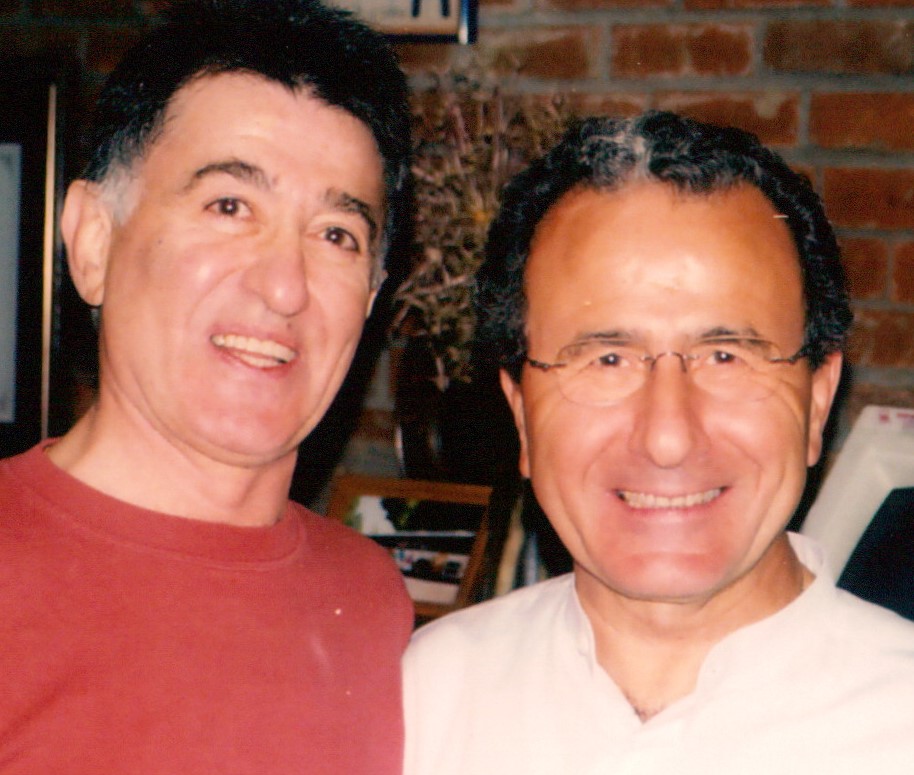 When my friend Zareh Marashlian learned I had gotten a visa he urged me to wait for him so we could go to America together. He was still in Aleppo and it took several months to get his documentation, but in late September 1969, seven years after I first started my quest to leave Syria, I was really going. I bought tickets to fly to Eugene, Oregon, and all of my family and friends gathered at my sister, Aznieve’s house in Beirut for a big send-off party. One attendee was a woman from Sudan who could see the future in your tea leaves.
I was nervous, of course, and scared, but determined to go. So, when my sister asked the Sudan woman to read my tea leaves, I was eager to know what lie ahead. We chatted as we drank the tea and when I had finished, she peered for several long minutes into the cup. When she looked up at me without moving her head, as if she was looking over invisible spectacles perched on the end of her nose, I got a bad feeling.
“You’re road is blocked,” she proclaimed, sitting up and swinging her arms wide as if wiping out all of the planning and effort I had invested in this quest. Looking me in the eye, she said, “You are not going.”
I looked her straight in the face and said, “I have the ticket already.”
Getting There
Finally, I was on my way. My friend Zareh got his paperwork, too, and we flew from Beirut to Sophia, Bulgaria. We decided to take a tour of the city during our five-hour layover there. Zareh stood in the long line to get an in-transit visa that would allow him to exit the airport, but I didn’t have the patience for that and just sneaked out.
We took a cab to the University of Sophia and when we got out to look around, Zareh asked the cabby to wait for us. Zareh had $600-$700 with him, but I had just $100 and was nervous about spending my meager stake on a cab but didn’t say anything. But when Zareh suggested that we pick up a couple of girls, that was too much.
“Just where are you going to take those girls?” I asked. That brought him to his senses and we headed back to the airport.
With the in-transit visa stamped in his passport, Zareh easily reentered the airport, but since I didn’t have one, the guard thought I was a doing something illegal, and wouldn’t let me back in. The Sudan woman’s words came back to me, “You’re not going.” Was this the roadblock she had seen n my tea leaves?
“Are you going?” Zareh called out to me. “I”m not going if you’re not going,” he said.Zareh shared my coming to America adventure.
I was more determined than ever that I was going and suggested the guard count how many people got off the plane and how many were waiting to re-board. The count was one short and he let me in. Next stop: Paris.
We were excited to be going to Paris, but when we got there, the guard would not let us leave the airport without an entry visa; there were no in-transit visas for the “City of Light”. We were escorted to a hotel inside the airport and told to stay there until our flight the next day. There was just one problem. The hotel was booked. When the guard pressed the matter, the clerk said they did have one room available. “Fine, give them that one,” the guard said. It turned out to be the strangest room I had ever seen.
It was a huge room with just one enormous bed located right in the middle – a round bed. The bathroom was also very large and it had a bathtub large enough for two – maybe three people.
“What kind of room is this?” I wondered out loud.
“It’s the honeymoon suite,” the guard answered.
The next morning Zareh and I were enjoying a “petit dejeuner” when an airport clerk approached us and told us that the captain wanted to speak to us. Zareh quickly responded, “We are eating now; the captain can wait.” He told the clerk to wait for us away from our table and to my surprise, she did.
This seemed like another roadblock and we wondered what the captain could possibly want to talk to us about. Did they know I didn’t have permission to go to Paris? Were they going to send us back to Beirut, or worse, Syria?.
When we had finished eating, we summoned the clerk who took led us to an airline representative (not the captain as she had said), but an intimidating figure nonetheless. When he told us we had a big problem, my heart sank. I was so close to getting to America – just one more flight. I just couldn’t be turned back now.
“What’s the problem?” I asked in French?
“Your bags are overweight, he said. “You need to pay $150 in additional fees.”
THAT’S what this was about? I thought. Overweight bags?! I couldn’t believe it; but with only about $100 to my name, I certainly couldn’t pay the fee. And time was getting late, now. We could see our gate down the concourse and all of the other passengers had already boarded. I threw open my bag and Zareh followed my lead. We started throwing clothing out of the bag onto the floor.
“Now, you weigh,” I said to the guard and I closed my bag. The guard looked at me as if I was crazy and said, “OK; put the clothes back in. But don’t do this again.”
We quickly threw all of our belongings back into our bags and ran down the concourse to our gate.”
“Vous êtes tous les deux fous!” (You are both fools), the guard yelled after us.
He wasn’t the first person to call my venture foolish. And i was as determined as ever now that he wouldn’t be the last one to be wrong. But there was just one small hurdle to surmount.
Welcome to America
When we landed in New York, we were shepherded to customs where the agent gave me a stern look and asked, “Do you have any drugs?”
“No,” I answered as confidently as I could, although my stomach was doing flip-flops.
“Do you have any marijuana?” he asked.
“No,” I said again. I may have been new to the country but I knew better than carrying anything illegal, let alone admitting I was doing so.
“Welcome to America,” he said, handing me my passport. I passed through the gate and thought, “Finally, finally, I had reached my goal. I was in America.
Zareh and I went outside and looked around. There were buses and cars and trucks driving everywhere.
“Let’s get a car a drive to Oregon,” Zareh suggested. “We can come back in a couple of hours for our bags.”
“I don’t think we should do that,” I responded, although I had no concept of how far New York was from Oregon.
On the flight to Portland we met a man by the name of Lee Huntsaker who was also going to Eugene. He said he had a car in Portland and could drive us to Eugene. We accepted his offer, turned in our Portland to Eugene flight and were reimbursed the $17 cost. (Those were the days.) Mr. Huntsaker drove us right to my friend John Arslanian’s door. John invited several Armenian and Arab friends over and we had a big celebration. It was Sept. 16, 1969.
The next morning I got up before everyone else and went for a walk. Being careful not to get lost, I made note of the buildings and noticed something strange. They were all made our of wood. “How dangerous,” I thought. Homes in the Middle East were made of stone so they wouldn’t burn.
As I walked along I noticed walnuts and apples that had fallen off the street trees and picked some up to eat. Outside of a bar called Mac’s Tavern, there were coins on the sidewalk and picked them up, too.
“Everything they said about America was true,” I thought. It truly was the land of plenty with abundant, free food and money lining the streets. I was more sure now than I had been since I was 15 that leaving Syria was the right thing for me to do.

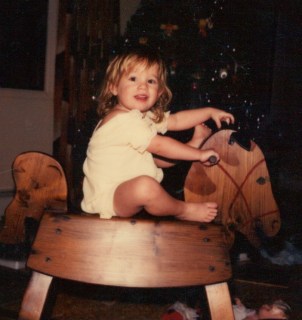
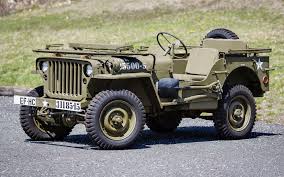 coined the term. Of course, many of our adventures were made possible because our dad had the Jeep dealership and he generously loaned us cars off the sales lot to drive and, because my big brother, Russ, was always up for testing the off road capabilities of those four-wheel drive vehicles. As for Dad, he was pretty much always willing to give Russ – his “number one son” – any car he wanted. So. when Dad took an old open-top military style Willys Jeep in trade one summer day, Russ had the keys before the previous owner was off the lot.
 Meekins Family Stories